

Who we are supporting: Quilombinho de Verão
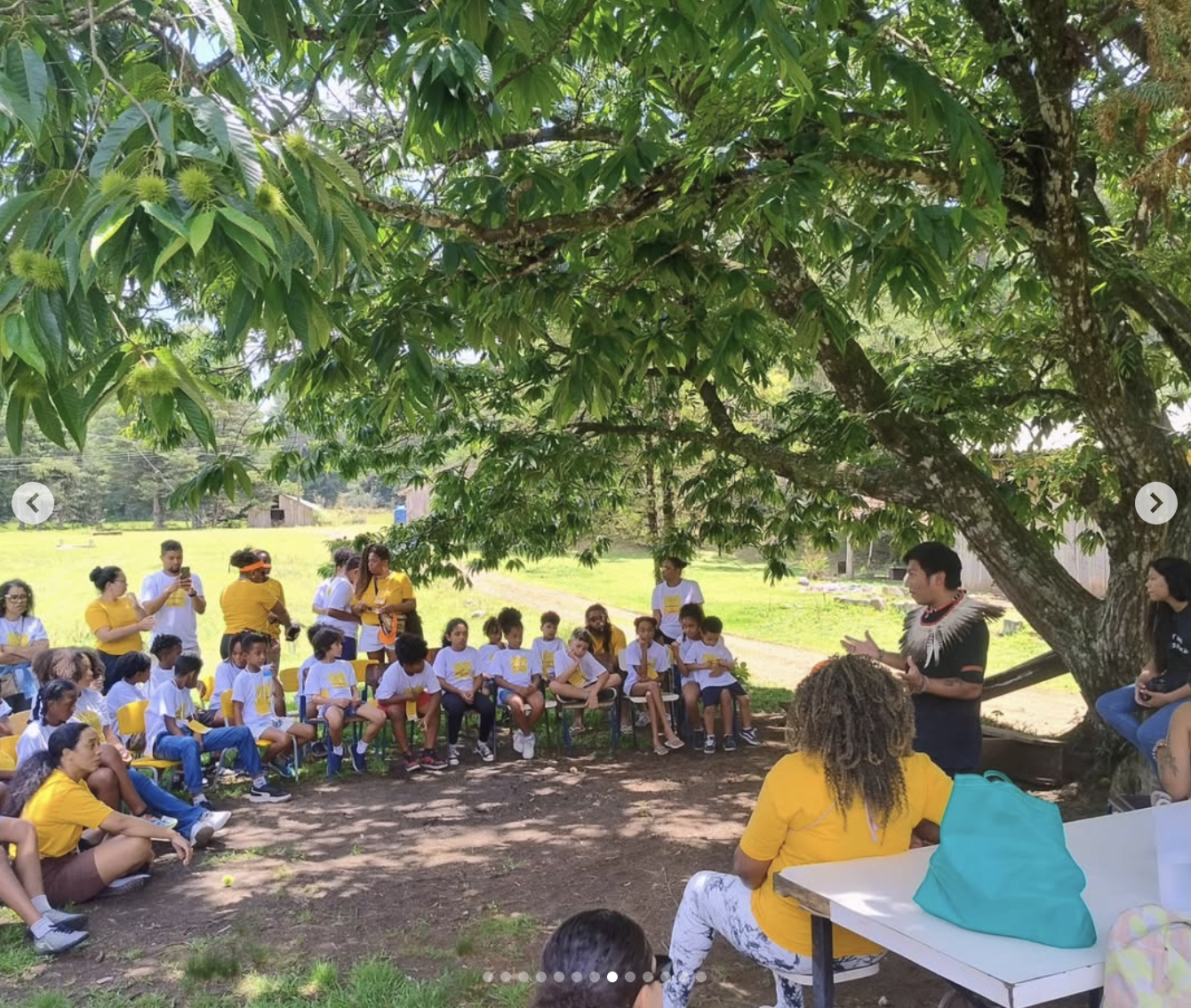
With the Brazilian NGO Usina da Imaginação, Shine a Light is supporting 10 innovative projects to promote dialogue between children and families from diverse cultures. Today, a quick look at Kilombinho de Verão, in the southern Brazilian state of Rio Grande do Sul.
The concept behind the Vivências – Kilombinho de Verão e Retomada Kaingang Kógünh Mág project was born from the urgent need to create spaces that prioritize Afro-Indigenous culture, and as a response to the lack of initiatives that value Black and Indigenous childhoods and youth through the lens of their own cultural frameworks. Our inspiration draws from Kilombos and Aldeias—territories of resistance, community, and freedom. It is through this convergence that children and adolescents will be invited to immerse themselves in ancestral experiences—experiences that respect the cycles of nature, the wisdom of elders, and the knowledge that emerges from working with one's hands and feeling with one's body. This intersection is not merely symbolic; it is historical, political, and cultural. The primary objective is to provide a transformative immersive experience within the Kaingang Kógünh Mág Retomada (reclaimed territory), located in the city of Canela, for the Kilombinho community. Subsequently—within the very space where Kilombinho takes place (the Porto Alegre Historical Archive)—we will host the Kógünh Mág community.
Initially (prior to the visits), the families participating in Kilombinho will be invited to read the book: Fàg kar segsó táhn: gufo u sí ag tú—*The Araucaria and the Blue Jay: A Story of the Ancient Kaingang*. The book presents a story that has been told among the Kaingang people since ancient times—passed down from generation to generation—whenever they gather around a campfire. The tale was recounted by Chief Maurício Salvador and translated into Portuguese by writer Ana Fonseca, who crafted the final text. The legend was published in both Kaingang (the Chief’s native tongue) and Portuguese, and features illustrations by Maureen Veras. The book was awarded the "Highly Recommended" seal by the National Foundation for Children's and Young Adult Books (FNLIJ) in the "Retelling" category, and received the Academy of Letters of Rio Grande do Sul Award for the best children's book. We have envisioned several workshops for the visits—always, however, with the utmost respect and care to ensure they are conducted with the community rather than for it. We will consult with community leaders beforehand and adapt our proposal to suit the specific context and territory, taking into account the input of those who belong to that community. Accordingly, for this initial phase of the Vivências – Kilombinho de Verão e Retomada Kaingang Kógünh Mág project, we have drafted several workshop suggestions inspired by the book Fàg kar segsó táhn: gufo u sí ag tú (*The Araucaria and the Azure Jay: A Story of the Ancient Kaingang*). These workshops focus on oral tradition, ancestry, ecology, and playfulness, and are designed to take place during the visit of the Kilombinho de Verão community to the Kaingang Kógünh Mág Retomada:
1. Listening to the Earth – A Circle with the Elders
2. The Walk of Knowledge – A Sensory Nature Trail
3. Seed Keepers – A Workshop with Pine Nuts
4. Body-Forest – A Movement and Performance Workshop
5. Weaving the Memories of the Encounter
And for the visit of the Kaingang Kógünh Mág community to the Historical Archive—joined by the Kilombinho de Verão community—we propose the following:
1. Workshop: Ancestral Araucaria – Stories That Grow with Time
2. Workshop: Flight of the Azure Jay – Guardians of the Seed
3. Workshop: Weaving Indigenous and Afro-Brazilian Stories
4. Workshop: Masks of the Forest – Creating Nature Spirits
5. Weaving the Memories of the Encounter
Through these activities, participants will experience the values of Afro-Indigenous cosmologies firsthand, internalizing—quite literally, in their own bodies—the power of collectivity, oral tradition, respect for nature, and ancestral spirituality. By the project’s conclusion, our aim is for the participating children to embrace their identities with pride, feeling a profound sense of belonging and finding their individual subjectivities nurtured and affirmed. We also aim to strengthen the bond between families, the territory, and ancestral knowledge, leaving behind—as a legacy—a replicable, community-based model of living for children and youth.